

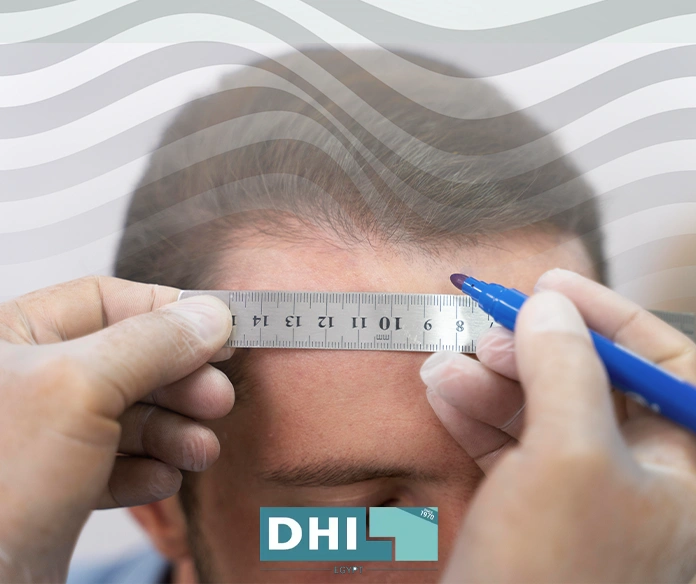
The sudden discovery of thinning patches or a receding hairline in your mirror is a nightmare that haunts many young men. However, the good news is that treatment for early baldness in youth is now possible with impressive results, thanks to incredible medical advancements. Early intervention is not just an option; it is the fine line between preserving your natural hair and losing it permanently. The faster you act, the greater your chances of restoring density without needing complex procedures in the future.
At DHI Egypt, we understand that your appearance is a core part of your self-confidence. Therefore, we don't just offer passing advice; we provide a world-class therapeutic system that starts with precise diagnosis and utilizes the world’s most advanced restoration techniques. Whether you are seeking treatment for early baldness in youth through approved pharmacological protocols or modern regenerative technologies, our goal at DHI is to stop hair loss at its roots and grant you a natural look that lasts a lifetime. Read on to learn how to distinguish between normal shedding and the start of baldness, and the practical steps to save your hair now.
How Do You Know if You’re Suffering from Early Baldness or Normal Shedding?
Distinguishing between normal hair loss and the onset of baldness in youth is a crucial step toward understanding the problem. While losing a certain number of hairs daily is normal, baldness indicates a more progressive and permanent pattern of loss.
1. Signs of Early Baldness (Premature Alopecia)
Early baldness in youth, particularly frontal baldness in men, is characterized by a clear and persistent pattern:
-
Receding Frontal Hairline: Hair gradually retreats from the sides of the forehead, forming an "M" shape.
-
Thinning at the Crown: Hair at the top of the head (the vertex) becomes weaker and less dense, making the scalp more visible.
-
Fine and Weak Hair: Thick hairs transform into thin, wispy strands (follicular miniaturization), eventually leading the follicle to stop producing hair.
-
Persistence: This pattern is continuous and worsens over time, often due to genetics.
2. Characteristics of Normal Hair Loss (Temporary)
Normal shedding is a natural part of the hair's life cycle, where 50 to 100 hairs fall out daily to be replaced by new growth.
-
Even Shedding: Loss occurs uniformly across the entire scalp, not concentrated in one area.
-
Temporary Nature: Often linked to factors like stress, hormonal changes (such as pregnancy), or nutritional deficiencies.
-
No Receding Hairline: You will not notice a change in the frontal hairline or specific bald patches.
Causes of Premature Baldness in Youth
Understanding the triggers is the first step toward effective treatment for early baldness in youth:
-
Genetics: Androgenetic Alopecia is the most common cause, passed down through genes.
-
Hormonal Changes: DHT (Dihydrotestosterone) plays a central role in shrinking hair follicles.
-
Medical Conditions: Thyroid disorders, Alopecia Areata, or fungal scalp infections.
-
Stress: Severe physical or psychological stress can push follicles into the shedding phase (Telogen Effluvium).
-
Nutrition: Lack of Iron, Zinc, Vitamin D, and Proteins negatively affects hair health.
Causes of Bald Patches at the Front of the Head
-
Traction Alopecia: Resulting from styling hair in ways that pull it tightly backward.
-
Fungal Infections (Tinea Capitis): Scaly patches that lead to localized hair loss.
Options for Treatment for Early Baldness in Youth
1. Pharmacological Treatments
-
Minoxidil: An over-the-counter topical foam or liquid that stimulates growth and prevents shedding.
-
Finasteride: An oral medication that reduces DHT levels, available only by prescription.
2. Hair Transplant Techniques and DHI
-
DHI (Direct Hair Implantation): DHI Egypt clinics rely on implanting follicles directly using precision tools (Choi Pens), ensuring the highest success rate with no scars or stitches.
-
FUE (Follicular Unit Extraction): Moving follicles from the donor area to bald areas, considered one of the most powerful treatments globally.
3. Regenerative Treatments: GFC and Regenera Activa
-
Regenera Activa: A revolutionary "autologous micro-grafting" technique that uses the patient's own tissue to activate dormant follicles in a single session.
-
GFC (Growth Factor Concentrate): A non-surgical procedure that uses concentrated proteins to increase hair thickness and extend its life cycle.
Hair Transplant: Candidates and Costs
Who is the Ideal Candidate for a Hair Transplant?
The ideal candidate is someone with stable hair loss, a healthy donor area, and realistic expectations. Doctors often prefer waiting until the baldness pattern stabilizes, typically between ages 25-30.
Cost of Hair Transplantation in Egypt 2026 (H3)
Costs in 2026 range between 30,000 and 100,000 EGP. The price depends on the technique (DHI starts from 50,000 EGP due to its precision), the number of follicles, and the center's expertise.
Why is DHI the Best Hair Transplant Center in Egypt?
-
Global Expertise: Founded in 1970 with over 54 years of experience and 300,000+ procedures worldwide.
-
Advanced DHI Technique: Total control over the depth, angle, and direction of every follicle for 100% natural results.
-
Certified Specialists: Procedures are performed exclusively by doctors certified by the DHI Total Care Academy in London.
-
High Survival Rate: A follicle survival rate exceeding 90%, significantly higher than the industry average.
-
Pain-Free & Scar-Free: Using tools smaller than 1mm, the procedure involves no scalpels, no stitches, and no visible scars.
Don't let hair loss affect your self-confidence. Contact DHI Egypt today for a consultation and discover how we can help you restore your natural density.